
 shreeharitravelsnadiad@gmail.com
 0268-2523733/+91-9033435631

Rajasthan
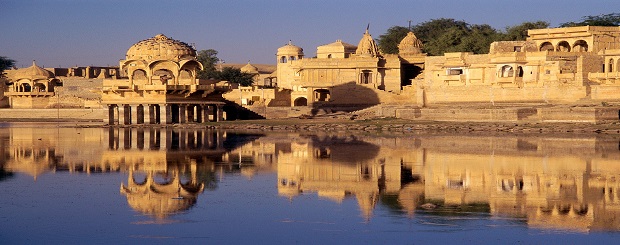
Rajasthan is a northern Indian state bordering Pakistan. Its palaces and forts are reminders of the many kingdoms that historically vied for the region. In its capital, Jaipur, are the 18th-century City Palace and Hawa Mahal, a former cloister for royal women, fronted by a 5-story sandstone screen. Amer Fort, atop a nearby hill, was built by a Rajput prince in the 1600s.
Birla Mandir
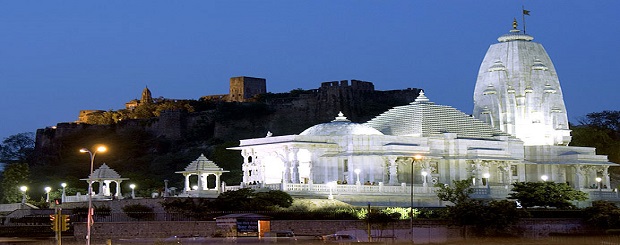
Birla Mandir, Jaipur is a Hindu temple located in Jaipur, India and is part of one of the several Birla mandirs located all around the country. The grand temple is located on an elevated ground at the base of Moti Dungari hill in Rajasthan. The temple is sometimes also referred to as the Laxmi Narayan Temple.
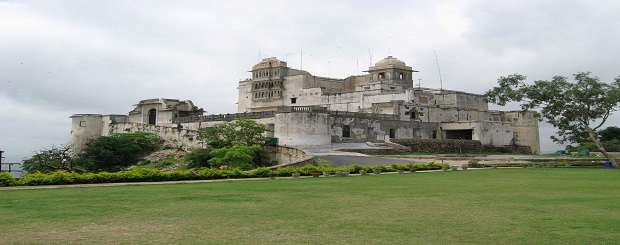
The Monsoon Palace
The Monsoon Palace, also known as the Sajjan Garh Palace, is a hilltop palatial residence in the city of Udaipur, Rajasthan in India, overlooking the Fateh Sagar Lake. It is named Sajjangarh after Maharana Sajjan Singh (1874–1884) of the Mewar Dynasty, who built it in 1884. The palace offers a panoramic view of the city's lakes, palaces and surrounding countryside. It was built chiefly to watch the monsoon clouds; hence, appropriately, it is popularly known as Monsoon Palace. It is said that the Maharana built it at the top of the hill to get a view of his ancestral home, Chittaurgarh. Previously owned by the Mewar royal family, it is now under the control of the Forest Department of the Government of Rajasthan and has recently been opened to the public. The palace provides a beautiful view of the sunset.
Fateh Sagar Lake
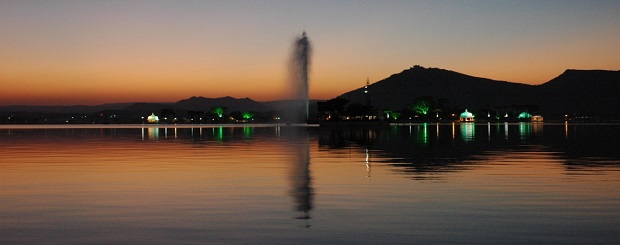
Fateh Sagar Lake is situated in the city of Udaipur in the Indian state of Rajasthan. It is an artificial lake named after Maharana Fateh Singh of Udaipur and Mewar ,constructed to the north-west of Udaipur, located to the north of Lake Pichola in the 1680s.It is one of the four lakes of the Udaipur city; the other three being : the Lake Pichola (within the Udaipur town), Udai Sagar Lake (13 km to the east of Udaipur) and Dhebar Lake or Jaisamand Lake (52 km south east of Udaipur).
Jaisalmer Fort
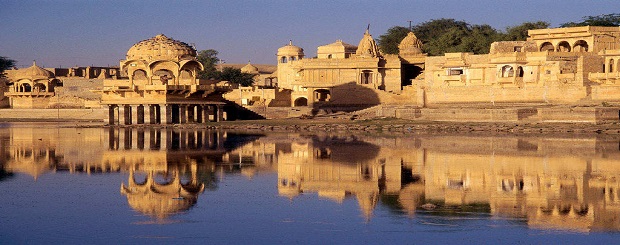
Jaisalmer Fort is one of the largest fortifications in the world. It is situated in the city of Jaisalmer, in the Indian state of Rajasthan. It is a World Heritage Site. It was built in 1156 AD by the Rajput ruler Rawal Jaisal, from whom it derives its name. (Rawal Jaisal's son was Shalivahan II; Manj and Bhati Rajputs are descended from him.) The fort stands amidst the sandy expanse of the great Thar Desert, on Trikuta Hill, and has been the scene of many battles. Its massive yellow sandstone walls are a tawny lion colour during the day, fading to honey-gold as the sun sets, thereby camouflaging the fort in the yellow desert. For this reason, it is also known as the Sonar Quila or Golden Fort. The fort is located in the very heart of the city, and is one of the most notable monuments in the locality.


 Travel and tourism is the largest service industry in India. It provides heritage, cultural, medical, business and sports tourism. The main objective of this sector is to develop and promote tourism, maintain competitiveness of India as tourist destination and improve and expand existing tourism products to ensure employment generation and economic growth.


